


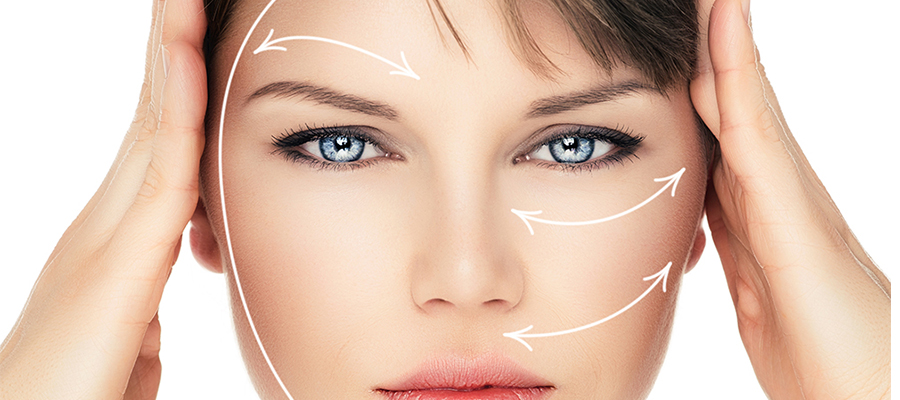
What Is a Non-Surgical Facelift?
Non-surgical facelift is the umbrella term for technology- and injection-based treatments that aim to tighten the skin, refine contours, and give a more youthful look without surgical incisions. Energy-based devices such as lasers, radiofrequency (RF), and focused ultrasound (HIFU/Ultherapy®) stimulate collagen and elastin production; fillers and botulinum toxin injections address volume loss and expression lines.
Note: This page is for information only; the appropriate method should be determined after an individualized consultation.
Who Is It For?
- Those with mild–moderate skin laxity and sagging (typically ages 30–55)
- People with partially preserved elasticity seeking jawline/cheek tightening
- Anyone wanting minimal downtime and a quick return to daily life
Expectations must be realistic: Non-surgical methods do not deliver results as dramatic or long-lasting as surgical facelifts; however, in suitable candidates they noticeably refresh the face.
Main Methods and When to Choose Them
- HIFU / Focused Ultrasound (Ultherapy®-like): Creates controlled heat in deeper tissues (SMAS/deep dermis). Targets: brow lift, midface tightening, submental/neck firming. Sessions: usually 1. Onset: becomes evident at 2–3 months. Longevity: ~9–18 months.
- RF Microneedling (radiofrequency microneedling): Delivers both microchannels and heat into the dermis. Effects: pores/scars, fine lines, tightening. Sessions: 3–4 sessions, 4–6 weeks apart. Longevity: 12+ months; maintenance advised. Downtime: redness 1–2 days.
- Monopolar/Bipolar RF (non-needling): Heats from the surface to tighten collagen. Effects: overall firming and “glow.” Sessions: 4–6 sessions every 2–4 weeks; periodic maintenance.
- Lasers (fractional CO₂/Er:YAG, non-ablative): Effects: texture/quality, fine lines, dyschromia; mild tightening. Sessions: 1–3+ depending on device/indication.
- Fillers (hyaluronic acid, CaHA, PLLA): Effects: midface volume loss, support for nasolabial/jawline; structural lifting illusion. Longevity: 6–18 months (product-dependent).
- Botulinum toxin: Effects: softens expression lines (forehead/glabella/crow’s feet); Nefertiti technique for neck bands. Longevity: 3–4 months.
- Thread lift (PDO/PLA): Minimally invasive lifting plus collagen stimulation. Areas: cheeks, jawline, brows. Longevity: 12–18 months.
- Biostimulators & PRP/CGF: Collagen boosting and tissue-quality support, often in combination protocols.
Treatment Process
- Assessment: Facial analysis, photography, evaluation of elasticity and fat distribution.
- Planning: Single/multi-modality plan tailored to target areas.
- Procedure: Topical anesthesia suffices for most; 30–90 minutes.
- Return: Usually same-day social downtime; brief redness/swelling depending on device/parameters.
When Are Results Visible? How Long Do They Last?
- Immediate: Fillers and botulinum toxin show visible change at once.
- Gradual: With HIFU/RF/lasers, new collagen becomes apparent in 4–12 weeks.
- Typical longevity ranges: HIFU 9–18 months; RF microneedling 12+ months; lasers 6–12 months; fillers 6–18 months; botulinum 3–4 months; thread lift 12–18 months.
Maintenance: Annual reviews and touch-ups as needed help sustain results; they do not become permanent.
Contraindications and Cautions
These vary by modality; in general, the following are not suitable without specialist clearance:
- Pregnancy/breastfeeding (most devices and injectables are postponed)
- Active infection/inflammation at the site, active herpes
- Severe keloid tendency or active dermatitis
- Neuromuscular disorders (for botulinum toxin)
- Pacemaker/implantable defibrillator (some RF and devices may be contraindicated)
- Recent isotretinoin use (caution with certain lasers)
- Bleeding disorders/anticoagulants (higher bruising risk with injectables)
Possible Side Effects
- Temporary: Redness, swelling, mild pain/tenderness, bruising.
- Rare: Burn/hyperpigmentation (incorrect energy/parameters), asymmetry (injectables), transient nerve irritation (device treatments).
Choosing an experienced team and proper patient selection reduces risks; adherence to aftercare is important.
Non-Surgical vs. Surgical Facelift
- Non-surgical: No scars, short downtime, cumulative yet limited lifting; requires periodic maintenance.
- Surgical: Stronger and more durable repositioning/excision; involves anesthesia, incisions, recovery, and potential scarring.
Aftercare
- Avoid intense heat (sauna, steam), vigorous exercise, and massage for 24–48 hours.
- Use SPF 30–50 and moisturizers.
- Follow procedure-specific advice (antivirals, creams, cold compress, etc.).
Frequently Asked Questions
How many sessions are needed?
HIFU typically 1 session; RF microneedling 3–4; non-invasive RF 4–6; lasers 1–3+; fillers/botulinum are single-session with periodic maintenance as needed.
Does it really work?
Yes, in appropriate candidates. The goal is natural refresh and tightening; advanced sagging may require surgical options.
When will I see results?
Fillers/botulinum: immediately; collagen-stimulating devices: gradually over 4–12 weeks.
Is combining treatments safe?
When sequenced and spaced correctly, synergy improves outcomes (e.g., HIFU + RF microneedling, then volume and expression management with fillers/botulinum). Protocols are individualized.
Non-Surgical Facelift Prices 2025
Non-surgical facelift prices 2025 vary by technology used, number of sessions, and combination plan. After a personal assessment we can share a tailored plan and fee information.